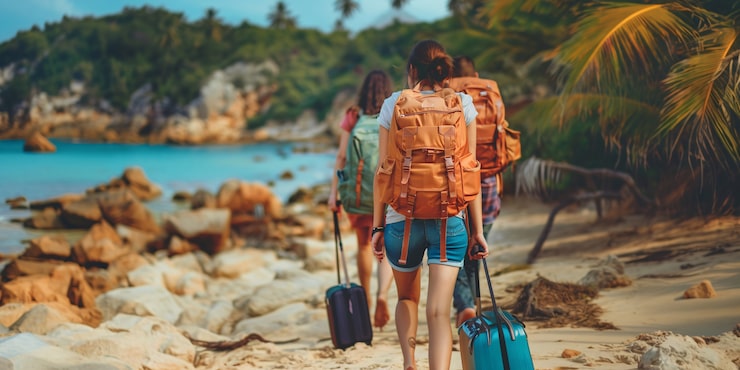

Adventure Travel for Couples: Skip the Spa, Try the Adrenaline
Not every couple wants a trip built around slow mornings and quiet dinners. For plenty of pairs, the version of a getaway that actually feels like quality time involves getting slightly out of breath together — a steep trail, cold water, a moment of shared nervousness right before doing something neither of you has done before. Adventure travel as a couple is a different kind of bonding experience than the standard romantic getaway, and for a lot of relationships, it turns out to be the more effective one.
Why Adrenaline Bonds Couples Differently Than Relaxation Does
There’s a reason “shared adversity” shows up so often in stories about how couples grew closer. Physically challenging or slightly nerve-wracking experiences produce adrenaline and, afterward, a rush of relief and accomplishment — and experiencing that cycle together tends to create a strong sense of teamwork. A couple that’s just finished a difficult hike or come out the other side of a nerve-wracking activity like a first scuba dive or a rock climb often reports feeling more connected in that moment than after a week of lying on a beach.
This isn’t to say relaxing trips don’t have value. But if a relationship already has plenty of quiet, low-stakes time built in, an adventure trip can offer something a beach resort simply can’t: a shared challenge with a clear, mutual sense of having gotten through it together.
Choosing an Adventure That Suits Both Fitness Levels
The most common mistake with adventure travel as a couple is one partner choosing an activity based on their own fitness or experience level without accounting for the other’s. A trip built around a challenge that’s exciting for one partner and miserable for the other tends to backfire, sometimes badly. Before booking anything ambitious, it’s worth having an honest conversation about actual fitness levels and prior experience — not the levels you wish you were at, but where you both realistically are right now.
For couples with mismatched experience, it often works better to choose an activity with built-in flexibility: a multi-day trek with the option to shorten certain days, a rafting trip with both a mellow and a more intense route, a climbing gym day before attempting anything outdoors. This lets both partners feel appropriately challenged without either one being pushed into something that feels unsafe or simply unenjoyable.
Popular Adventure Trip Ideas That Work Well for Two
Multi-day trekking routes remain one of the most reliable adventure trip formats for couples, largely because they combine physical challenge with long stretches of uninterrupted conversation and shared scenery, without requiring specialized skills. Routes with hut-to-hut accommodation are especially couple-friendly, since they remove the need to carry camping gear while still delivering a genuine sense of accomplishment each day.
Water-based adventures — sea kayaking, whitewater rafting, or a beginner surf trip — tend to work well for couples who want adrenaline without a heavy physical training requirement beforehand. Most of these activities can be done at a beginner level with guides, which levels the playing field between partners with different experience levels.
For couples drawn to something a bit further outside the ordinary, activities like canyoning, via ferrata routes, or a first scuba certification course offer a strong sense of shared achievement, since both partners are usually experiencing the activity for the first time together, rather than one person being the “expert” showing the other the ropes.
Packing and Preparing Without Overdoing It
Adventure trips tend to come with more gear anxiety than standard vacations, and it’s easy for one partner — often whoever is more experienced or more of a planner — to end up managing all of the preparation. This is worth avoiding, both because it’s an unfair division of labor and because shared preparation is part of what makes the eventual trip feel like a joint accomplishment. Splitting research tasks — one person handles gear, the other handles routes and permits, for example — keeps both people invested from the planning stage onward.
It’s also worth resisting the urge to over-pack specialized gear for a first attempt at a new activity. Most adventure activities can be tried with rented or guide-provided equipment before either partner commits to buying their own gear, which keeps the financial and logistical stakes low enough that a first attempt doesn’t feel like a huge commitment.
Managing Fear Without Managing Each Other
It’s common for one partner in a couple to be more naturally cautious than the other, and adventure travel has a way of surfacing this quickly. The key is to avoid two common traps: one partner pressuring the other past their actual comfort level, or one partner constantly downplaying the trip to avoid confronting their own nerves. Neither approach tends to end well.
A more useful approach is treating fear as information rather than an obstacle to argue past. If one partner is hesitant about a particular activity, it’s worth discussing specifically what feels risky — is it a genuine safety concern, or more general nervousness about something unfamiliar? Reputable guides and instructors are usually well-practiced at working with mixed-confidence groups, and a good outfitter can often make an activity feel far more manageable than it initially seems.
The Payoff Tends to Last Longer Than the Trip
Couples who take on adventure trips together often describe a lingering sense of confidence afterward — not just about future travel, but about their relationship’s ability to handle difficult or unfamiliar situations generally. There’s something to the idea that a couple who has navigated a genuinely challenging trek, a nerve-wracking dive, or an unpredictable multi-day rafting trip together has, in a small way, tested and strengthened their teamwork under real conditions. That’s a different kind of souvenir than a nice photo from a beach chair, and for a lot of couples, it’s the one that actually sticks.
Balancing Adventure With Recovery Time
One thing experienced adventure travelers eventually learn, often the hard way, is that back-to-back high-intensity days tend to produce diminishing returns, both physically and emotionally. A couple that schedules a demanding trek followed immediately by a full day of whitewater rafting followed by an early flight home often finishes the trip more depleted than fulfilled, and small irritations that wouldn’t normally matter — a slow breakfast, a delayed shuttle — start to feel much bigger than they are once real fatigue sets in.
Building in at least one genuinely low-key day for every two or three demanding ones tends to keep both the trip and the relationship in better shape. This doesn’t need to mean a full rest day with nothing planned; even a slower morning followed by a short, easy activity gives bodies time to recover and gives both partners a chance to actually process and talk about what they just did, rather than immediately moving on to the next challenge. Some of the best conversations on adventure trips happen during these lower-key stretches, when the adrenaline has faded enough to actually reflect on the experience rather than just push through it. It’s a small planning habit, but it’s often the difference between coming home energized and coming home simply exhausted, with the actual memories of the trip already starting to blur together.